Standard lab measurements of cubic feet per minute per watt (CFM/Watt) and pounds-force per kilowatt (Lbf/kW) fail to replicate real kitchen conditions. Grease accumulation adds mechanical resistance to fans, increasing energy consumption by 20–40% compared to clean-lab environments—per industry assessments from ASHRAE and the DOE. This buildup forces ventilation systems to work harder to maintain airflow, invalidating pristine lab benchmarks. Kitchen layouts with equipment obstructions further disrupt airflow patterns, compounding efficiency losses. Without grease-resilient design and proactive maintenance protocols, operators risk 30% higher energy costs despite favorable lab ratings.
The ASHRAE Field Study (2022–2023) analyzed 57 commercial kitchens and found actual energy use ranged from 0.8–1.4 kWh per 1,000 CFM—significantly exceeding lab predictions. High-grease environments averaged 35% higher consumption due to particulate buildup increasing static pressure. Kitchens with quarterly professional cleaning maintained performance within 15% of lab benchmarks, while neglected systems degraded by up to 40%. This confirms that real-world energy efficiency depends on grease management as critically as equipment selection—underscoring the need for field-validated metrics in commercial kitchen ventilation system specifications.
Electronically Commutated (EC) motors outperform belt-driven centrifugal fans in commercial kitchen ventilation systems, delivering 40–60% energy savings according to the Department of Energy’s 2023 Commercial Fan Study. Unlike traditional systems with mechanical losses, EC motors use variable-speed control to match airflow demands precisely. A restaurant replacing belt-driven fans with EC technology reduced annual energy costs by $1,200 while maintaining 1,800 CFM exhaust rates. Key advantages include:
| Fan Type | Efficiency (CFM/Watt) | Static Pressure Handling | Ideal Application |
|---|---|---|---|
| EC Motor | 8.2–12.6 | High | Hood exhaust, demand-based |
| Belt-Driven Centrifugal | 4.1–6.3 | High | Fixed-load exhaust |
| Axial | 6.5–9.8 | Low | Supplemental air movement |
Field tests confirm EC motors maintain efficiency above 85% across 20–100% speed ranges—even in grease-heavy environments.
While axial fans advertise high CFM ratings, they struggle with static pressure demands in commercial kitchen hood systems. ASHRAE 2023 field data shows axial units consume 0.8 kW per 1,000 CFM—over double EC motor consumption (0.35 kW)—when ductwork exceeds 15 feet. This inefficiency stems from:
In ASHRAE's 2022–2023 Field Performance Report, 78% of axial installations required supplemental fans to meet hood capture velocity standards, negating initial cost savings. Proper commercial kitchen ventilation requires technologies engineered for pressure resilience—not just raw airflow claims.
Energy Recovery Ventilators (ERVs) capture 55–82% of exhaust energy in commercial kitchen ventilation systems through combined sensible (temperature) and latent (moisture) transfer. This dual recovery mechanism significantly reduces HVAC loads—critical in high-humidity cooking environments where moisture management impacts both efficiency and safety. Climate dictates actual savings:
Payback periods range from 2–5 years based on local energy costs and kitchen operational hours. For example, a Chicago-based restaurant saving $1,200 annually on heating achieves ROI in 4.2 years versus 3.1 years for a Miami establishment reducing dehumidification loads. Dedicated Outdoor Air Systems (DOAS) paired with ERVs amplify savings by decoupling ventilation from temperature control—a strategy driving market growth projected to reach $2.7 billion by 2034 (NY Engineers 2024). System selection must prioritize climate-adaptive performance metrics over nominal efficiency ratings to maximize operational savings.
High Volume Low Speed (HVLS) fans serve as strategic energy-saving complements to commercial kitchen ventilation systems by counteracting thermal stratification. Cooking processes generate intense heat that rises toward ceilings, creating temperature differentials of up to 15°F between floor and overhead zones. This stratification forces HVAC systems to work harder during winter to maintain workspace comfort—and increases air conditioning loads in summer. HVLS fans disrupt this cycle by gently circulating large air volumes. Their slow rotation pushes trapped warmth downward in winter, reducing heating needs by 20–30%. During warmer months, they create air velocities of 0.5–2 mph, generating evaporative cooling effects equivalent to 5–8°F temperature drops. This allows thermostat adjustments that cut cooling energy consumption by 15–25%. The reduced thermal load directly decreases demand on exhaust hoods and makeup air handlers, optimizing the entire ventilation ecosystem. Enhanced air movement also improves humidity control and contaminant dispersion—creating safer kitchen environments while lowering total energy expenditure.
Why do standard lab ratings fail for commercial kitchen ventilation systems?
Standard lab ratings do not account for real-world conditions such as grease buildup and obstructions, which significantly increase mechanical resistance and energy consumption.
What is the benefit of using EC motors in commercial kitchens?
EC motors offer 40–60% energy savings, higher efficiency across variable speeds, reduced maintenance, and better real-time performance monitoring compared to traditional belt-driven systems.
How do ERVs help reduce energy consumption?
Energy Recovery Ventilators recover 55–82% of exhaust energy by managing sensible and latent heat, lowering HVAC loads and adapting to climate-specific demands.
Why are HVLS fans used in commercial kitchens?
HVLS fans mitigate thermal stratification, improve humidity control, reduce heating and cooling loads, and ensure a safer, more comfortable kitchen environment.
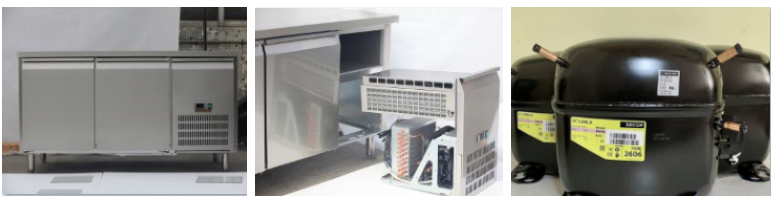

Guangzhou ANK Kitchen Equipment Co., Ltd provides commercial kitchen equipment manufacturing and end-to-end food-service solutions for hotels, restaurants & bars. Smart, durable, globally deployed. 18+ years expertise. Request a project consultation today.
Unit 101, No. 4, Huachuang Animation Industrial Park ii, Shiqi Town, Panyu District, Guangzhou City, Guangdong Province, China.
Copyright © Guangzhou ANK Kitchen Equipment Co., Ltd Privacy Policy