The Department of Energy and EU Ecodesign rules set for 2026 will require appliances to use as much as 30% less power than what we saw in 2023 models. At the same time, these new standards push for getting rid of refrigerants with high global warming potential. Companies that fail to comply face serious consequences, including fines reaching nearly $750,000 per incident according to Ponemon Institute research from last year. This has created a rush among grocery stores, restaurants, and hotels to upgrade their equipment before deadlines hit. Many manufacturers are now working on redesigns incorporating greener options such as carbon dioxide (R744) and propane (R290). While compliance is mandatory, some businesses see this as an opportunity to get ahead of competitors by adopting cutting edge technology earlier than required.
Starting in January 2026, the new Energy Star® v8.0 sets efficiency standards that are about 15% tougher than what we've seen before, which is changing how companies think about buying equipment. Getting certified under these rules can cut down on electricity bills by as much as 40%, according to Ancaster Food Equipment from 2024. That makes looking at lifetime costs when shopping for gear absolutely essential these days. What does the standard actually focus on? Three main tech areas stand out: compressors that adjust themselves based on need, those fancy vacuum insulated panels, and defrost systems that know when they need to kick in. The North America Commercial Refrigeration Report shows that around 78% of facility managers want vendors who meet Energy Star® v8.0 requirements now. This isn't just good for wallets either. Companies see their return on investment coming faster while still hitting their green goals at the same time.
Commercial refrigerators that save energy help reduce greenhouse gases in two main ways: they need less electricity and they use better refrigerants. These models consume about 40% less power than standard ones, which means fewer carbon dioxide emissions from the electrical grid. Newer versions also switch to refrigerants with much lower global warming potential. Compared to old hydrofluorocarbon refrigerants, these new options create around 68% less atmospheric warming. When businesses replace their old fridges with these efficient models, each one prevents roughly 8.2 metric tons of CO2 equivalent emissions every year. That's similar to taking two cars off the road completely according to recent sustainability data from 2024.
Refrigerators that save energy can actually pay for themselves over time. Take a standard 25 foot long cooler for example it cuts down on electric bills by around three thousand dollars each year based on what people are paying now across the United States. Fixing problems costs much less too because modern units have those variable speed compressors plus built in sensors that catch small issues before they turn into big repairs. All these improvements mean most businesses see their investment back within three to five years while getting another seven years out of their equipment on average. What started as just being good for the environment ends up making real money sense in the long run.
Variable speed compressors adjust their cooling output based on what's actually needed at any given moment, which cuts down on wasted energy compared to older fixed speed systems. According to industry data, these can cut power consumption anywhere from 15 to 30 percent. Pair them with vacuum insulated panels that have those tiny pores stopping heat from leaking through, and we see heat transfer drop around half. Systems that combine both approaches run about 20% better than regular equipment out there. This means less electricity usage overall and less strain on the compressor parts, which makes a real difference when looking at total cost of ownership over time (Energy Efficient Refrigeration Study 2023).
Refrigerators powered by artificial intelligence rely on smart algorithms that process live sensor information from various sources like when doors are opened, how products shift around inside, and changes in surrounding humidity levels. These systems then tweak their cooling settings ahead of time instead of waiting for problems to happen. The result? Temperatures stay stable within just half a degree Celsius range, and there's about forty percent fewer defrosting events happening throughout the day. Alongside this tech, special airflow mechanisms work hand in hand with the AI brainpower to direct chilly air exactly where it needs to go through carefully planned routes. This prevents those annoying warm spots forming anywhere inside without making the compressor work harder than necessary. Stores that see lots of customers coming and going all day long have actually seen energy bills drop by roughly twenty two percent after installing such systems. And let's face it, saving money on electricity costs while keeping food fresh makes perfect business sense for anyone running a retail operation today.
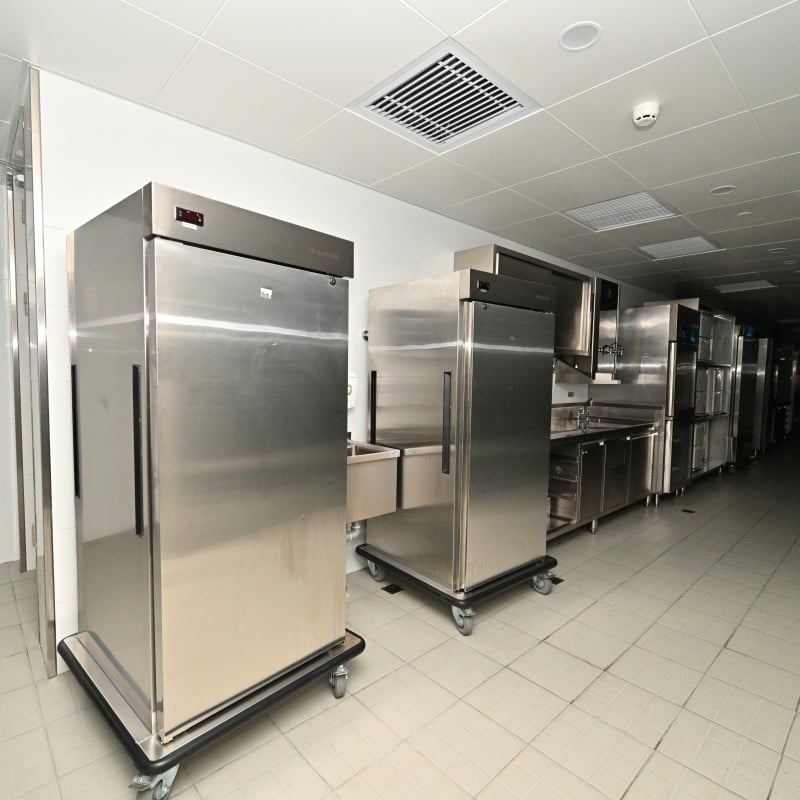

Guangzhou ANK Kitchen Equipment Co., Ltd provides commercial kitchen equipment manufacturing and end-to-end food-service solutions for hotels, restaurants & bars. Smart, durable, globally deployed. 18+ years expertise. Request a project consultation today.
Unit 101, No. 4, Huachuang Animation Industrial Park ii, Shiqi Town, Panyu District, Guangzhou City, Guangdong Province, China.
Copyright © Guangzhou ANK Kitchen Equipment Co., Ltd Privacy Policy