Energy-efficient commercial refrigerators are a cornerstone of profitable, sustainable business operations, delivering dual core value: dramatic reductions in long-term running costs, and reliable support for your corporate sustainability and emissions reduction targets. Conventional commercial refrigeration equipment consumes approximately 55,000 kilowatt hours of electricity annually — exponentially more than residential refrigeration appliances — with ongoing utility costs directly cutting into your business's bottom line month after month.
When businesses upgrade to ENERGY STAR certified commercial refrigeration models, they reduce carbon emissions by an estimated 8.3 tons per unit, per year. This not only positions your brand ahead of increasingly sustainability-focused consumers, but also ensures compliance with tightening global emissions and energy efficiency regulations. Beyond cost and compliance, advanced energy-efficient refrigeration technology delivers unmatched temperature stability, drastically reducing food spoilage and waste even during peak business hours. Combined, these benefits translate to lower utility expenses, extended equipment service life, reduced food waste costs, and a strengthened, more competitive brand reputation in the market. Investing in energy-efficient commercial refrigeration isn't just a financially smart decision — it's rapidly becoming a non-negotiable requirement for long-term competitiveness in the global hospitality, foodservice, and food manufacturing sectors.
With evolving global regulations and a crowded marketplace of equipment, understanding the core standards and certifications that define truly efficient commercial refrigeration is critical for making compliant, cost-effective purchasing decisions.
ENERGY STAR certification, administered by the U.S. Environmental Protection Agency (EPA), signifies that a product meets strict, third-party-verified energy efficiency standards that outperform conventional models. To earn the ENERGY STAR label, commercial refrigeration equipment must reduce energy consumption by a minimum of 20% compared to standard baseline models.
Manufacturers achieve these efficiency gains through advanced design features, including variable-speed compressors, high-density thermal insulation, precision temperature controls, and optimized airflow systems. The certification process mandates strict adherence to annual energy consumption (kWh/year) limits, tailored to equipment type and size: for example, a standard transparent door reach-in commercial refrigerator must meet a maximum annual energy consumption threshold of 1,400 kWh under Version 5.0 specifications. Certified units must also use low global warming potential (GWP) refrigerants (such as R-600a) and pass rigorous independent lab testing.
On average, ENERGY STAR certified commercial refrigerators deliver approximately $300 in annual electricity cost savings, while cutting carbon emissions by an estimated 1.2 metric tons per unit, per year. This delivers measurable value for both your operational budget and your business's environmental, social, and governance (ESG) reporting metrics.
The U.S. Department of Energy (DOE) establishes mandatory minimum efficiency requirements for commercial refrigeration equipment under federal regulation 10 CFR Part 431, with standards updated regularly to align with advancing technology and global sustainability goals. These regulations define strict daily energy consumption limits for every category of commercial refrigeration equipment: for example, solid door reach-in refrigerators are capped at approximately 0.1 times their internal volume, plus 1.7 kilowatt hours per day.
Most businesses were required to achieve full compliance with the 2025 DOE efficiency mandates by early 2025, with non-compliance carrying fines of up to nearly $500 per non-qualifying appliance. Looking ahead, even stricter efficiency requirements are scheduled to roll out between 2026 and 2028, with proposed updates targeting a 15% to 30% additional reduction in energy consumption. These upcoming changes will not only drive long-term operational cost savings, but also align U.S. efficiency standards with global benchmarks, including IEC 60335-2-89.
Understanding how to read and compare commercial refrigeration efficiency labels is critical to selecting equipment that delivers on its promised savings, rather than falling for marketing claims without verified data.
The mandatory EnergyGuide label provides a clear, standardized breakdown of the unit's estimated annual energy consumption in kilowatt hours (kWh/year), enabling direct side-by-side cost and efficiency comparisons between different models and brands. The Air-Conditioning, Heating, and Refrigeration Institute (AHRI) certification provides an additional layer of credibility: this third-party verification confirms that a unit's published efficiency and performance specifications match real-world lab-tested results.
Daily kWh consumption benchmarks also bring technical specifications into real-world operational context — a critical factor for restaurant, hotel, and foodservice operators, whose refrigeration equipment runs 24/7, with fluctuating demand between peak service hours and off-peak periods. Understanding a unit's real-world consumption patterns allows you to accurately forecast monthly utility costs based on your facility's operating hours and usage cycles.
Annual energy consumption (kWh/year) figures can be misleading without accounting for two critical factors: a unit's usable storage capacity, and its real-world duty cycle in your operating environment. For example, a 40 ft³ commercial walk-in cooler with an 8,000 kWh/year rating may appear inefficient on paper—yet its normalized efficiency rate of 200 kWh/ft³ may significantly outperform smaller, lower-rated units.
Duty cycle, defined primarily by hourly door openings and runtime, has a dramatic impact on real-world energy draw:
For context, a unit rated at 6,500 kWh/year under moderate lab conditions (15 door openings per hour) can exceed 8,000 kWh/year in a high-traffic commercial kitchen environment. Always evaluate annual kWh ratings alongside three core metrics:
A typical 500-litre (≈17.7 ft³) commercial reach-in refrigerator averages 2,200 kWh/year in standard operating conditions — but capacity-optimized, energy-efficient models achieving ≤1.5 kWh/ft³/year can cut annual energy costs by up to $240 at an average electricity rate of $0.12/kWh.
Energy-efficient commercial refrigeration is the foundation of lower operational overhead, regulatory compliance, reduced food waste, and measurable sustainability gains for your foodservice, hospitality, or food manufacturing business — no operational upgrade delivers a more consistent, long-term return on investment. By selecting equipment engineered to meet strict global efficiency standards, with verified real-world performance tailored to your operating environment, you'll lock in predictable costs and a competitive edge for years to come.
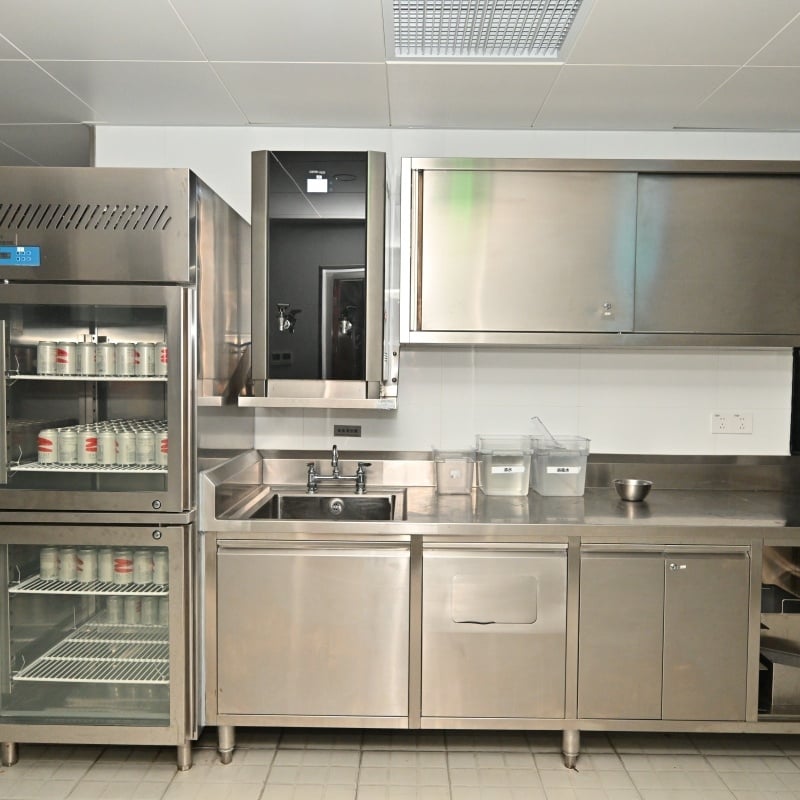
For commercial-grade, energy-efficient refrigeration solutions customized to your facility's unique needs, or to build a full-suite commercial kitchen system paired with industry-leading cooking, holding, and stainless steel fabrication solutions, partner with a provider with proven global foodservice expertise. ANK brings 18+ years of experience designing and manufacturing ENERGY STAR, DOE, CE, and ISO 22000 compliant commercial refrigeration equipment — from energy-saving reach-in refrigerators and undercounter units to high-efficiency walk-in coolers and ice machines — trusted by 800+ hotel, restaurant, and food manufacturing clients worldwide. Contact us today for a no-obligation consultation, custom ROI analysis report, or full technical specification sheet for our energy-efficient commercial refrigeration line.

Guangzhou ANK Kitchen Equipment Co., Ltd provides commercial kitchen equipment manufacturing and end-to-end food-service solutions for hotels, restaurants & bars. Smart, durable, globally deployed. 18+ years expertise. Request a project consultation today.
Unit 101, No. 4, Huachuang Animation Industrial Park ii, Shiqi Town, Panyu District, Guangzhou City, Guangdong Province, China.
Copyright © Guangzhou ANK Kitchen Equipment Co., Ltd Privacy Policy